Measure three features on the empty sample
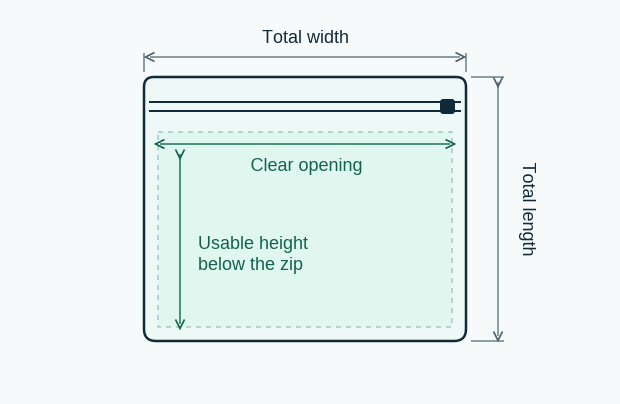
- Flat dimensions. Lay the empty bag flat without tension. Note the external width and length, including the area above the zipper.
- Clear opening. Open the sample without stretching it. Measure the usable span between the zipper ends or the points that limit the opening.
- Usable height. Measure from the inside bottom to the underside of the closure. Record where the seals or construction affect the usable space.
Keep the reference code, measurement unit and a photo of the endpoints together. Check whether a previous drawing shows external dimensions or internal measurements before entering the figures into the fit tool.
Measure the item in the way it enters
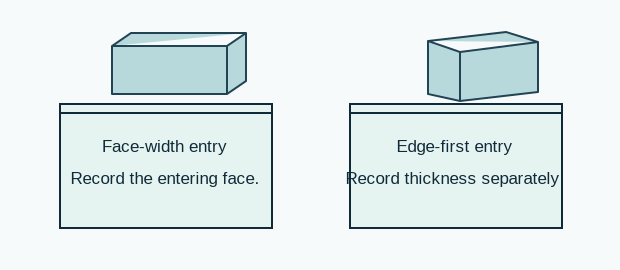
Write down the item face width in the chosen insertion direction, the height in its final position and the greatest thickness. Include any label, sleeve or card. If the item is rigid, compare the intended direction with one alternative using the same sample, then record where an edge or corner catches.
Check available space above the loaded item
Settle the item in place and compare the usable height with the loaded height. Leave the space your project needs for the zipper to engage and for staff to handle the bag. Use the fit check to preserve these observations with your sample reference.